 Skip to content
Explore Portland Head Light, Military History, and Maine’s Rugged Coastline at Fort Williams Park
Whenever we visit the New England area, one place we always make time for is Fort Williams Park. Located along the rocky coastline of Cape Elizabeth just outside Portland, the park has become one of our favorite stops while traveling through the Northeast. We’ve visited both during the fall and winter seasons, and each time the experience feels completely different. No matter the weather, though, the combination of ocean views, military history, and historic buildings always makes it worth the stop.


For us, the area works perfectly as part of a larger New England road trip. We often stay around Portsmouth because it makes a great central hub for exploring coastal New Hampshire and southern Maine. From there, it’s an easy drive north toward Portland and Fort Williams Park. We especially enjoy pairing the visit with trips to Freeport, known for its shopping, local restaurants, and Maine charm.
What makes Fort Williams Park stand out from many coastal parks is that it combines natural beauty with genuine historical importance. The park is not just home to one of the most photographed lighthouses in the United States – it also preserves the remains of an important military fort that once defended the Portland harbor region.

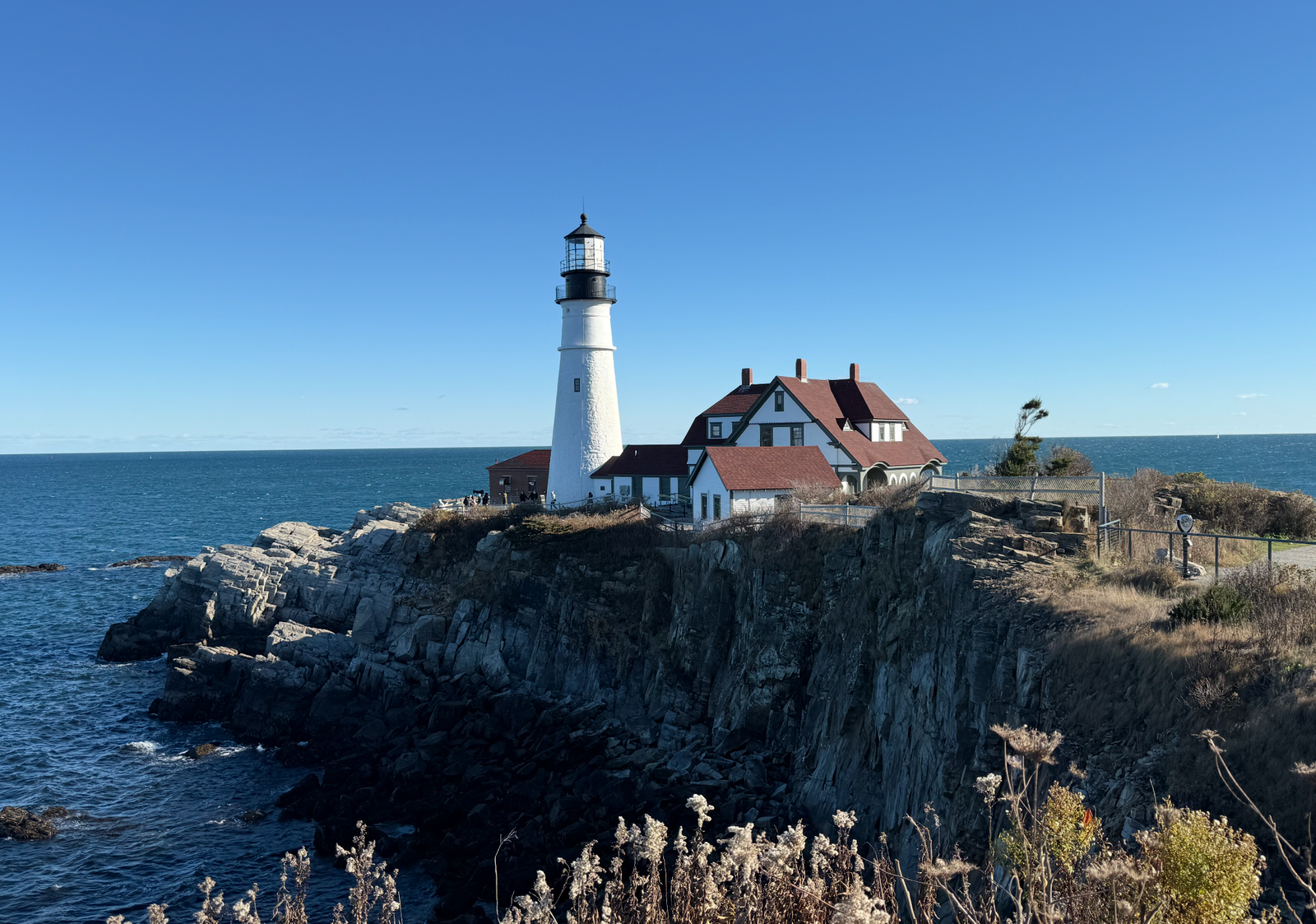
The centerpiece of the park is undoubtedly Portland Head Light. Built in 1791, it is the oldest lighthouse in Maine and one of the oldest surviving lighthouses in the entire United States. The lighthouse was commissioned by President George Washington shortly after the American Revolution, when the young country began investing in coastal navigation and maritime safety.
Construction of the lighthouse reportedly cost around $1,500 at the time, and the original structure used whale oil lamps to guide ships approaching the dangerous rocky coastline. Over the years, the lighthouse underwent several upgrades as technology improved. The tower was raised in height during the 1800s, and the lighting systems eventually evolved from oil lamps to Fresnel lenses and modern automated systems.


Even today, standing near the cliffs and looking out over the Atlantic Ocean, it becomes easy to understand why the lighthouse was needed. The Maine coastline is beautiful, but it is also rugged and dangerous. Jagged rocks stretch along the shore, and storms rolling in from the Atlantic can quickly make navigation difficult.
During our winter visit, the landscape felt almost unreal. The cold ocean wind moved across the shoreline while waves crashed into partially frozen rocks below. Snow covered sections of the park, and the gray Atlantic skies gave the lighthouse an even more dramatic appearance. Winter visits are much quieter compared to the busy tourist months, which made the experience feel more peaceful and reflective.
The fall visit offered something completely different. The trees surrounding the park displayed deep reds, oranges, and yellows, creating a classic New England coastal atmosphere. The cooler temperatures made it comfortable to walk throughout the grounds while taking in the scenery. Fall also gave the area a more active feeling, with visitors photographing the lighthouse and exploring the old fort structures before the harsher winter weather arrived.
One of our favorite parts of visiting Fort Williams Park is walking around the remains of the military buildings scattered throughout the property. Many visitors focus entirely on the lighthouse, but the fort itself has an extensive history dating back to the late 1800s.
The United States military established Fort Williams in 1872 as part of a broader coastal defense strategy designed to protect Portland Harbor. Because Portland was an important shipping and naval location, the harbor required protection from potential naval attacks. The fort eventually became part of America’s Endicott Period coastal defense system, which modernized military fortifications during the late 19th century.

Over time, Fort Williams expanded with barracks, gun batteries, officer quarters, storage facilities, and underground bunkers. Soldiers stationed there were responsible for defending the coastline and monitoring maritime activity entering the harbor.
Walking through the park today, many of those historic structures still remain. Concrete gun emplacements overlook the ocean, while old military buildings and foundations can still be explored throughout the grounds. Some structures have weathered heavily from decades of harsh coastal storms, but that almost adds to the atmosphere. It feels less like a polished tourist attraction and more like a preserved piece of history slowly being reclaimed by nature.
One feature we particularly enjoy is seeing the historic homes and buildings throughout the park. The older structures provide a glimpse into how military officers and families once lived along the coast. Combined with the lighthouse and ocean backdrop, the area feels like a living snapshot of New England history.


The park also contains the Portland Head Light Museum, which helps tell the story of both the lighthouse and the fort. Inside are historical artifacts, photographs, shipwreck information, and exhibits covering Maine’s maritime history. For anyone interested in American coastal history, the museum adds important context to the experience.
Another reason we keep returning is simply because the park is enjoyable to walk around regardless of the season. The open grassy areas, rocky shoreline paths, and ocean overlooks make it easy to spend several hours there without feeling rushed. Every section of the coastline seems to offer another view of the lighthouse or another angle of the Atlantic waves crashing against the cliffs.
Photography is also a huge part of the experience. Portland Head Light is one of the most recognizable landmarks in Maine for a reason. Whether surrounded by fall colors, covered in snow, or standing beneath summer sunshine, the lighthouse photographs beautifully from almost every direction.
For travelers planning a coastal New England trip, Fort Williams Park is an easy recommendation. Its location near Portland makes it convenient, while the combination of history and scenery gives it much more depth than a typical coastal viewpoint.


The park works especially well as part of a larger Maine and New Hampshire itinerary. Staying around Portsmouth allows for easy day trips north into Maine while still being close to many historic New England towns and attractions. For us, the drive between Portsmouth, Freeport, and Cape Elizabeth has become one of our favorite stretches of road in the region.
What keeps bringing us back, though, is how authentic the area feels. Fort Williams Park is not overly commercialized. Instead, it preserves the rugged coastal character and layered history that make New England so unique. Between the historic lighthouse, old military defenses, crashing Atlantic waves, and preserved buildings, the park offers a rare opportunity to experience both natural beauty and American history in the same place.


Leave a Reply