 Skip to content
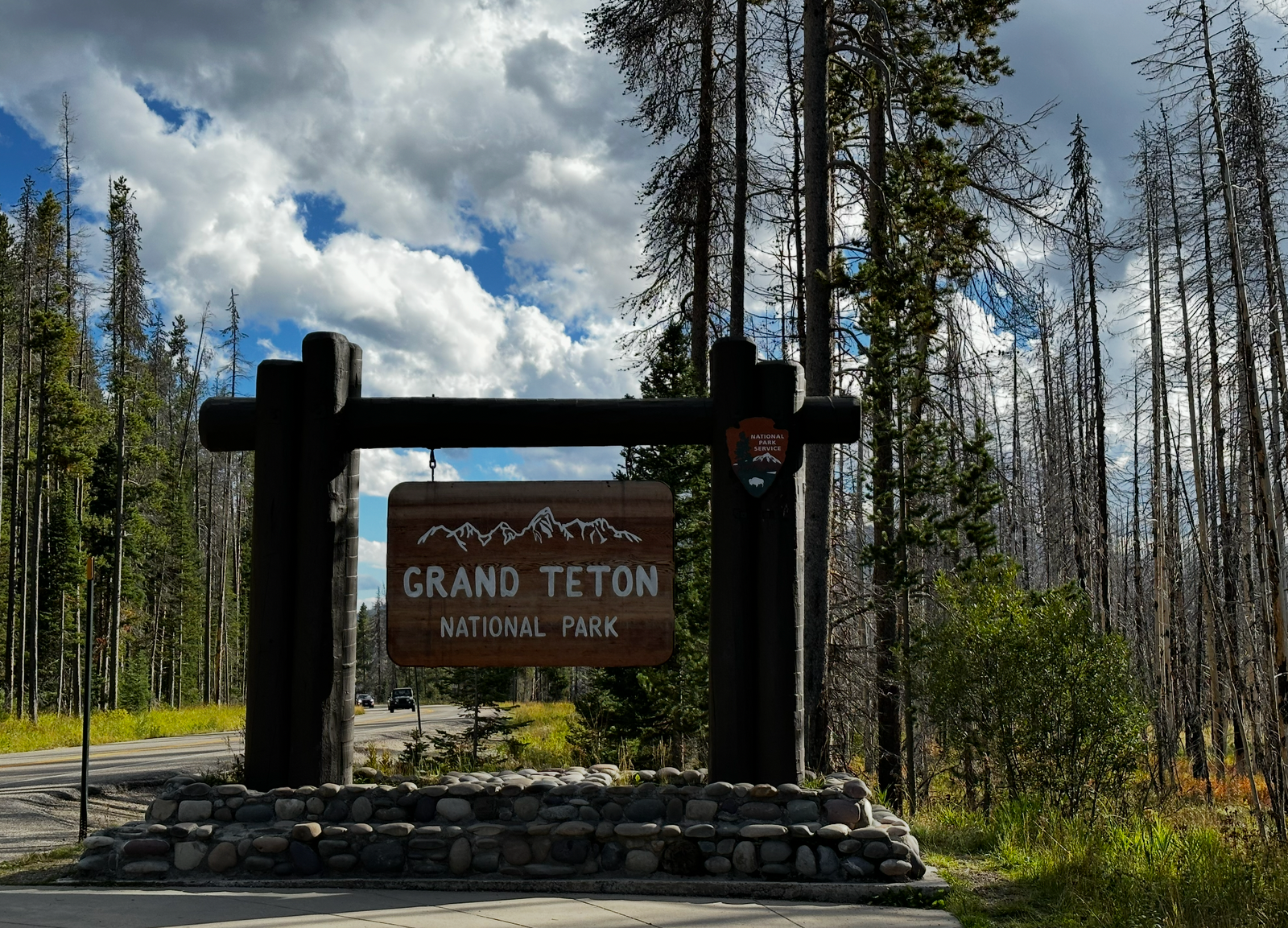
Exploring Grand Teton National Park from Yellowstone With Mountain Views, Historic Lodges, Jenny Lake Hiking, and a Peaceful Boat Ride Through Wyoming’s Most Stunning Landscape
Grand Teton National Park is one of those places that almost doesn’t feel real when you first see it. Driving south from Yellowstone, the landscape slowly changes from rolling forests and geothermal valleys into towering jagged peaks that seem to rise straight out of the earth. Unlike many mountain ranges that gradually slope upward, the Tetons dramatically shoot almost 7,000 feet above the valley floor with very little foothill transition. It’s one of the reasons the mountain range is considered one of the most recognizable landscapes in the United States.
Our trip into the park started from the north after spending time near Yellowstone National Park. The moment the Teton Range came into view, we understood why so many photographers, filmmakers, and artists have been inspired by this area for generations. The mountains looked almost cinematic, like a painted movie backdrop rather than something real. Even from the roadside pull-offs, the views were incredible enough to make us immediately stop the car and walk around for a while taking photos.

The Grand Teton mountain range itself was formed millions of years ago through fault-block activity. Unlike volcanic mountains, the Tetons were created when the earth’s crust shifted vertically along the Teton Fault. The mountains rose while the valley below, known as Jackson Hole, sank downward. Because glaciers later carved through the range during the Ice Age, the peaks developed their sharp, dramatic appearance that makes them stand out compared to many other mountain ranges in the Rockies.
The tallest peak in the range, Grand Teton, rises to 13,775 feet. French-Canadian trappers are believed to have named the mountains “les trois tétons,” meaning “the three breasts,” referring to the three prominent peaks visible from the valley. While the exact origin is debated, the name has remained tied to the region for centuries.


One thing that surprised us while driving through the park was how open the valley areas are compared to Yellowstone. Large grassy plains stretch for miles with the mountains towering directly behind them. Wildlife frequently moves through these areas, and Grand Teton National Park is known for moose, elk, bison, black bears, grizzly bears, bald eagles, and even wolves that occasionally travel between Yellowstone and the Tetons through the Greater Yellowstone Ecosystem.
After spending some time at roadside viewpoints, we continued toward Jackson Lake Lodge. Even if you are not staying overnight, the lodge is worth visiting simply for the view alone. Originally opened in the 1950s, Jackson Lake Lodge became famous for its massive picture windows overlooking the Teton Range. The building was designed to blend into the landscape while still showcasing one of the most famous mountain panoramas in the country.

The lodge itself has deep ties to conservation history as well. Rockefeller family contributions helped preserve much of the Jackson Hole valley from private development during the early 1900s. John D. Rockefeller Jr. quietly purchased large amounts of land in the area through the Snake River Land Company to help protect the landscape. Those lands were later donated and became a major part of Grand Teton National Park.

The image shows the menu of the Pioneer Grill.
Inside Jackson Lake Lodge, we stopped to eat at the Pioneer Grill. The restaurant has a more casual atmosphere compared to the main dining room, but the real highlight was still the surrounding scenery. Sitting there while looking out toward the mountains and Jackson Lake felt like stepping into a classic American national park road trip from decades ago.
Jackson Lake itself is one of the largest high-altitude lakes in the United States. While natural in origin, the lake level was expanded through a dam project in the early 1900s to help provide irrigation water throughout Idaho and surrounding agricultural areas. Today, it has become one of the park’s most scenic recreation spots for boating, fishing, kayaking, and photography.
After leaving the lodge, we continued through the park and stopped at Mountain View Turnout. One of the best parts about Grand Teton National Park is that even simple roadside stops can provide postcard-worthy views. The turnout overlooked both the mountains and the valley below, creating one of those scenes that almost feels too perfect to be real. The changing lighting across the mountains throughout the day constantly shifts the appearance of the landscape, especially during sunset hours when the peaks begin glowing gold and orange.


From there, we eventually made our way toward Jenny Lake Visitor Center. Jenny Lake is one of the most famous locations in Grand Teton National Park and was formed thousands of years ago by glaciers descending from the mountains. The lake was named after Shoshone woman Jenny Leigh, who married a trapper named Richard “Beaver Dick” Leigh during the 1800s. The area around the lake later became one of the earliest tourism destinations in the Tetons long before the national park officially formed in 1929.
The Jenny Lake area is also one of the busiest sections of the park because it provides access to some of the most famous hiking trails in Wyoming. Cascade Canyon, Hidden Falls, Inspiration Point, and other trails begin from this area. The hiking routes allow visitors to travel deep into the mountain range without needing technical climbing equipment.

We spent time hiking around the southwest side of Jenny Lake, taking in the scenery while following the shoreline trail. The combination of crystal-clear water, pine forests, and the towering mountains directly overhead made it one of the most peaceful parts of the entire trip. Unlike some national parks where viewpoints are separated from the landscape, Jenny Lake makes you feel fully surrounded by the mountains. Including great possible views of the wildlife – we saw a mouse with its young.
By the time we reached the Jenny Lake boating area, the final boats of the evening were beginning to return to the visitor center. Unfortunately, it had gotten too late for us to continue deeper into Cascade Canyon, which is often considered one of the best hikes in the park. The canyon is famous for its dramatic cliffs, waterfalls, alpine scenery, and wildlife sightings, but even without reaching it, the area around Jenny Lake alone was worth the visit.


The boat ride back across the lake ended up becoming one of the most memorable parts of the day. The water had become calm as evening settled in, creating reflections of the mountains across the lake’s surface. Seeing the Teton Range from the middle of the water gave an entirely different perspective compared to the roadside viewpoints earlier in the day. It was quiet, peaceful, and honestly one of those moments where everyone on the boat simply seemed focused on the scenery around them.


As the sun continued dropping behind the mountains, we finally began the drive back north toward Yellowstone where our cabin was located. Even after spending the entire day in the park, it still felt like there was far more left to explore. Grand Teton National Park may sit beside Yellowstone, but it has an atmosphere entirely its own. Yellowstone is known for geothermal activity and massive wilderness, while the Tetons feel more dramatic, rugged, and almost storybook-like in appearance.
For us, the trip became one of the highlights of visiting Wyoming. Between the historic lodges, glacial lakes, scenic boat rides, wildlife-filled valleys, and towering mountain views, Grand Teton National Park felt like one of the most visually stunning places we had ever visited.


Leave a Reply