 Skip to content
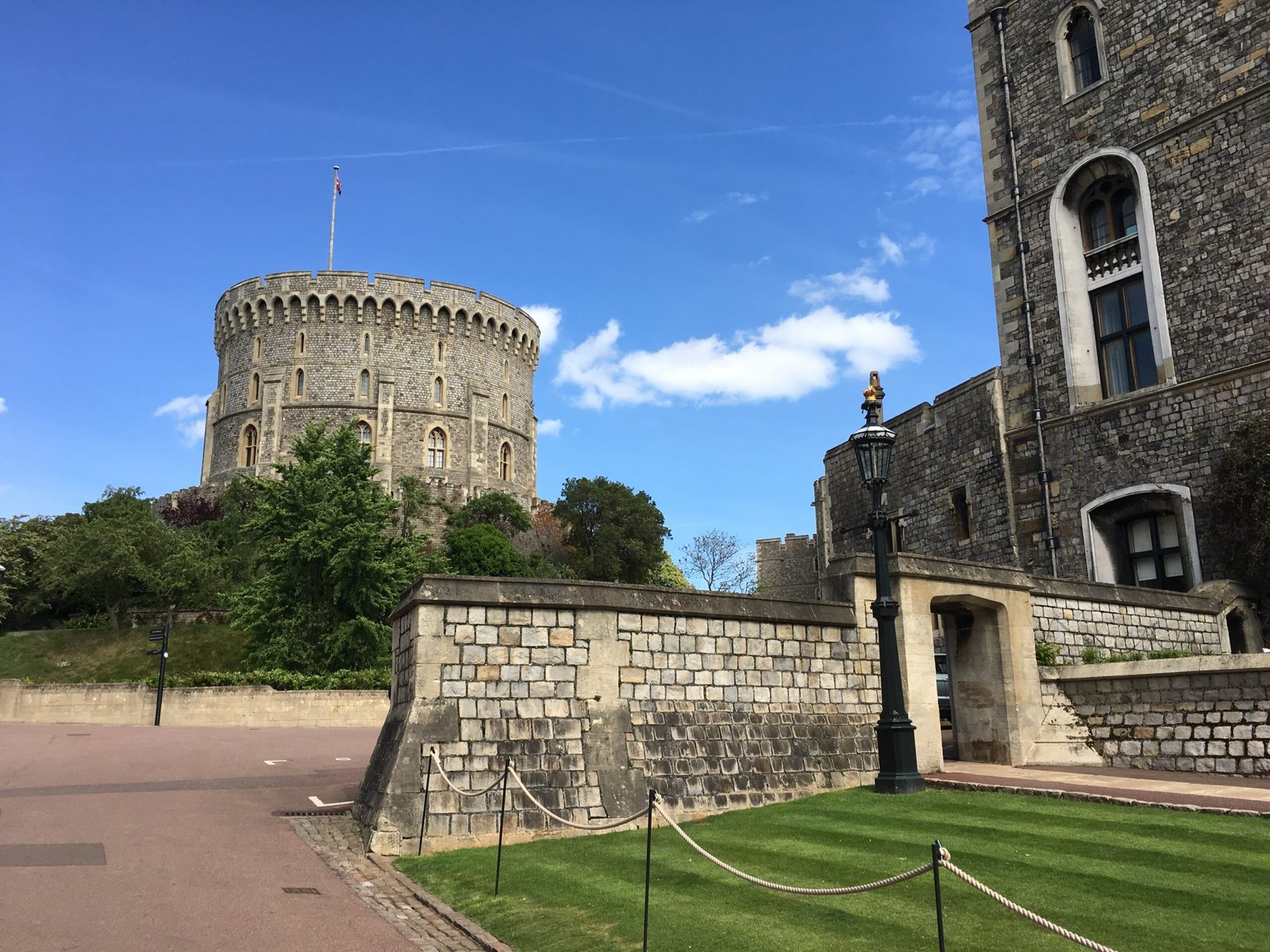
Explore the history of Windsor Castle, stroll through the charming town of Windsor, and discover what makes this royal destination one of England’s most iconic landmarks.
Walking through Windsor felt a little like stepping back in time – only with modern shops, restaurants, and everyday life continuing around the historic buildings. The town has preserved much of its traditional character, and Windsor Castle rises above it as a constant reminder of the area’s long connection to the British monarchy.
Katie and I visited Windsor during the summer, when the streets were busy, and the grounds around the castle were especially green. Between the castle’s architecture, the guards moving through town, and even a few corgis enjoying the grass, the entire visit felt distinctly British.
Windsor Castle was naturally the main reason for our visit, but the surrounding town added more to the experience than we expected. Windsor is not simply a castle surrounded by tourist attractions. It is an active town with centuries-old streets, traditional buildings, modern businesses, and one of the most historically important royal residences in the world.
Walking Through the Town of Windsor

Windsor is located in Berkshire, west of central London and directly across the River Thames from Eton. Although the castle dominates the skyline, the town itself has an extensive history.
The settlement that became Windsor existed before the construction of the castle. According to the area’s official tourism history, the original settlement was several miles away and was later moved closer to the castle before 1110. The relocated town became known as New Windsor and developed as a planned medieval community.
That history is still visible when walking through town.

Some parts of Windsor have a polished and modern appearance, while others retain narrow streets, older brickwork, traditional storefronts, and views of stone castle walls. It does not feel frozen in the past. Instead, the historical buildings have been incorporated into a functioning modern town.
That balance is what made Windsor interesting to us. We could walk past restaurants and familiar stores before turning a corner and seeing fortified walls that have stood for hundreds of years. It felt historic without being disconnected from present-day life.
The town’s age shows, but most of the historic areas appear carefully maintained. Some of the buildings are relatively simple compared with the castle, yet their age and traditional details give the streets character.
The History of Windsor Castle
Windsor Castle was founded by William the Conqueror in the 11th century, following the Norman conquest of England. The original structure formed part of a defensive ring of castles around London and was strategically positioned above the River Thames.

The first castle was primarily a military fortification built from timber. Over time, later monarchs replaced and expanded its structures in stone.
By 1110, King Henry I had domestic accommodations within the castle. During the late 12th century, Henry II transformed Windsor into a more substantial royal palace, creating official apartments as well as private living quarters.
Windsor Castle has been associated with approximately 1,000 years of royal history. It has served as the home of 40 monarchs and is recognized as the oldest and largest occupied castle in the world.

Unlike a castle preserved only as a museum, Windsor remains a working royal residence. Its State Apartments continue to be used by members of the Royal Family for official occasions and ceremonial events.
Knowing that the castle is still in use changes the experience of seeing it. Windsor does not feel like an abandoned medieval fortress. It feels like a historic complex that has continuously evolved to meet the needs of different monarchs and periods.

Seeing Windsor Castle From the Grounds
The castle’s scale became clearer as we approached it.

Its stone walls, towers, courtyards, and separate buildings create a large complex rather than one individual palace. The castle is divided into wards, with the prominent Round Tower rising near the center.
Despite its name, the Round Tower is not perfectly round. The current stone tower was developed under Henry II during the 12th century on the location of William the Conqueror’s original wooden keep. It was altered by later monarchs as Windsor Castle continued to expand.
The architecture varies throughout the grounds. Some sections are highly decorative, with detailed stonework, large windows, towers, and Gothic elements. Other parts are more restrained and practical.

This variety reflects the castle’s long construction history. Windsor was not completed according to a single architectural plan. Different monarchs altered and rebuilt sections according to the tastes and requirements of their own periods.
That mixture was one of the most interesting aspects of the castle for us. Some areas looked grand and ceremonial, while others were surprisingly simple. Even the less decorative sections had visible age and character, and the entire property appeared carefully preserved.
The green grounds softened the appearance of the heavy stone buildings. During our summer visit, the grass was bright and well-maintained, creating a strong contrast against the castle walls.
We also saw corgis on the grass, which felt especially fitting at Windsor because the breed became so closely associated with Queen Elizabeth II. It was a small moment, but it added to the atmosphere of our visit.

Seeing the Guards in Windsor
During our time in Windsor, we saw guards passing through the area.
The Windsor Guard March is one of the town’s best-known traditions. On scheduled days, guards march through Windsor and enter the castle for the Changing of the Guard. The schedule is determined by the British Army and may vary from month to month. A military band often accompanies the guards, although this can depend on the weather and specific schedule.
The guards can often be seen along the High Street, Castle Hill, and near the Windsor Guildhall. The actual Changing of the Guard ceremony takes place inside the castle grounds, so visitors need castle admission to watch that portion of the event.
Even briefly seeing the guards move through Windsor gave us a sense that many of the town’s traditions remain active. It was not simply a performance recreated inside a museum. The military presence is part of the castle’s ongoing ceremonial role.
St. George’s Chapel
One of Windsor Castle’s most historically significant buildings is St. George’s Chapel.
The chapel is an active place of worship and is directly connected to the monarch rather than operating under the authority of a bishop or archbishop. This makes it what is known as a Royal Peculiar. Daily services are held there and are open to the public when circumstances permit.


St. George’s Chapel is also closely connected to the Order of the Garter, Britain’s oldest and most senior order of chivalry. The order was established by Edward III during the 14th century and continues to hold an annual procession and service at Windsor.
The chapel is the burial place of numerous monarchs, including Henry VIII, Charles I, George V, George VI, and Queen Elizabeth II.
Architecturally, the chapel is one of the most detailed areas of the castle complex. Its Gothic design, large windows, carved stone, and prominent position within the Lower Ward make it stand apart from the more defensive-looking walls and towers.
A Castle That Has Continued to Change

Windsor Castle has survived wars, political changes, rebuilding projects, and major damage.
One of the most serious modern events occurred in 1992, when a fire began inside the castle and damaged or destroyed more than 100 rooms. The restoration took approximately five years and required extensive conservation and reconstruction.
The repair work maintained the castle’s historic character while also introducing carefully designed new elements. This restoration is another reason the property appears so well-maintained despite the age of many of its buildings.
That preservation stood out during our visit. Windsor Castle does not look new, nor should it. Its stone surfaces, uneven details, and variety of architectural styles reveal its age. At the same time, it is clear that considerable work goes into protecting the complex.
Final Thoughts on Visiting Windsor

Our summer visit to Windsor gave us the chance to experience both an important historical site and an active English town.
The town felt like a modernized version of the past. Historic streets and traditional buildings were mixed with stores, restaurants, visitors, and daily life. Windsor Castle remained visible above it all, tying the town’s present identity to nearly 1,000 years of royal history.
Inside and around the castle grounds, we saw green lawns, impressive stone architecture, guards moving through the area, and corgis resting or playing on the grass. Some sections of the castle were highly detailed, while others were surprisingly simple. Together, they showed how Windsor developed gradually rather than being built during one single period.
For travelers interested in British history, royal traditions, architecture, or easy excursions from London, Windsor is worth visiting. The castle may be the main attraction, but walking around the town is an important part of understanding the destination.
Windsor does not feel like a place created only for tourists. It feels like a historic community that has continued adapting around one of the world’s most famous castles.



Leave a Reply