 Skip to content
From Yellowstone to Red Lodge Through One of the Highest Roads in the Northern Rockies

There are scenic drives across the United States, and then there is the Beartooth Highway. Stretching between the northeast entrance of Yellowstone National Park and the mountain town of Red Lodge, the Beartooth Highway is widely considered one of the most beautiful roads in America. The route climbs through the rugged peaks of the Northern Rockies, winding past alpine lakes, towering cliffs, forests, and some of the highest elevations accessible by paved road in the region. During much of the year the highway is lined with snowbanks taller than vehicles, creating walls of snow along the sides of the road that make the drive feel almost unreal.
When Katie and I visited in October, most of the snow had finally melted away, opening the mountains to incredible panoramic views. About 95% of the snow was gone, though small patches still remained tucked into shaded areas and along the higher peaks. Seeing the mountains without the heavy snow allowed us to appreciate just how massive and dramatic the landscape truly is. Even without the towering snow walls, the road still felt intense. The highway twists sharply around cliffs, climbs to extreme elevations, and narrows in places enough to make even confident drivers grip the steering wheel a little tighter.
My dad had driven us through the Beartooth Highway years earlier during one of our family RV road trips across the United States. I still remember him joking multiple times about needing to “change his pants to brown so nobody can see his fear.” Looking back, he honestly was not exaggerating much. There are stretches of the highway where one side of the road hugs the mountain while the other drops dramatically into the valley below. Between the steep drop-offs, the sharp switchbacks, and the sheer elevation, it is definitely not a drive for the weak of heart.
Still, that challenge is part of what makes the Beartooth Highway unforgettable.
The History Behind the Highway

The Beartooth Highway follows part of U.S. Route 212 and officially opened in 1936 after years of difficult construction work through the mountains. The highway was created to provide a scenic route connecting Red Lodge directly to Yellowstone National Park, though building a road through such rugged terrain was no easy task. Engineers and construction crews had to blast through mountain rock, carve roads into steep cliffsides, and create a route capable of surviving the brutal mountain environment.
The highway is named after Beartooth Mountain, whose jagged summit was said to resemble the tooth of a bear. Long before the road existed, Indigenous peoples, including the Crow Nation, traveled through these mountains and valleys. The region holds deep Native American history that stretches back centuries before Yellowstone became America’s first national park.
Because of the highway’s elevation, the road is usually only open seasonally. Winter conditions in this part of Montana and Wyoming are extremely harsh, and snowfall can become overwhelming even by Rocky Mountain standards. Most years the road closes sometime during autumn and does not fully reopen until late spring or early summer, depending on snow removal efforts. In especially snowy years, plows cut through massive snowbanks that can tower well above cars on both sides of the road.
That seasonal nature makes the drive feel even more special. Visiting the Beartooth Highway almost feels like catching a brief window into an environment that spends much of the year buried under snow and ice.
Driving Above the Tree Line

One of the most incredible parts of the Beartooth Highway is how quickly the landscape changes as you climb higher into the mountains. The drive begins among forests and rivers before gradually transitioning into rocky alpine terrain where trees almost completely disappear. At certain points, it honestly feels less like driving through mountains and more like driving above the clouds.
The road reaches elevations of nearly 11,000 feet near Beartooth Pass, making it one of the highest highways in the Northern Rockies. Along the way, countless scenic overlooks provide sweeping views across Montana and Wyoming. Alpine lakes reflect the mountains around them, while distant peaks seem to stretch endlessly into the horizon. Even in October, the air felt noticeably colder at the higher elevations, reminding us how quickly weather can change in these mountains.

At the same time, the beauty of the drive constantly competes with the reality of how intimidating the road can be. The switchbacks are tight, many sections have minimal guardrails, and weather conditions can shift rapidly without warning. Drivers have to stay alert the entire time. Even though the views make you want to stare out the window constantly, the road itself demands attention.
That nervous excitement almost becomes part of the experience. You find yourself both amazed by the scenery and slightly relieved every time you make it through another sharp turn.
Rock Creek Vista Point and the Hungry Chipmunks

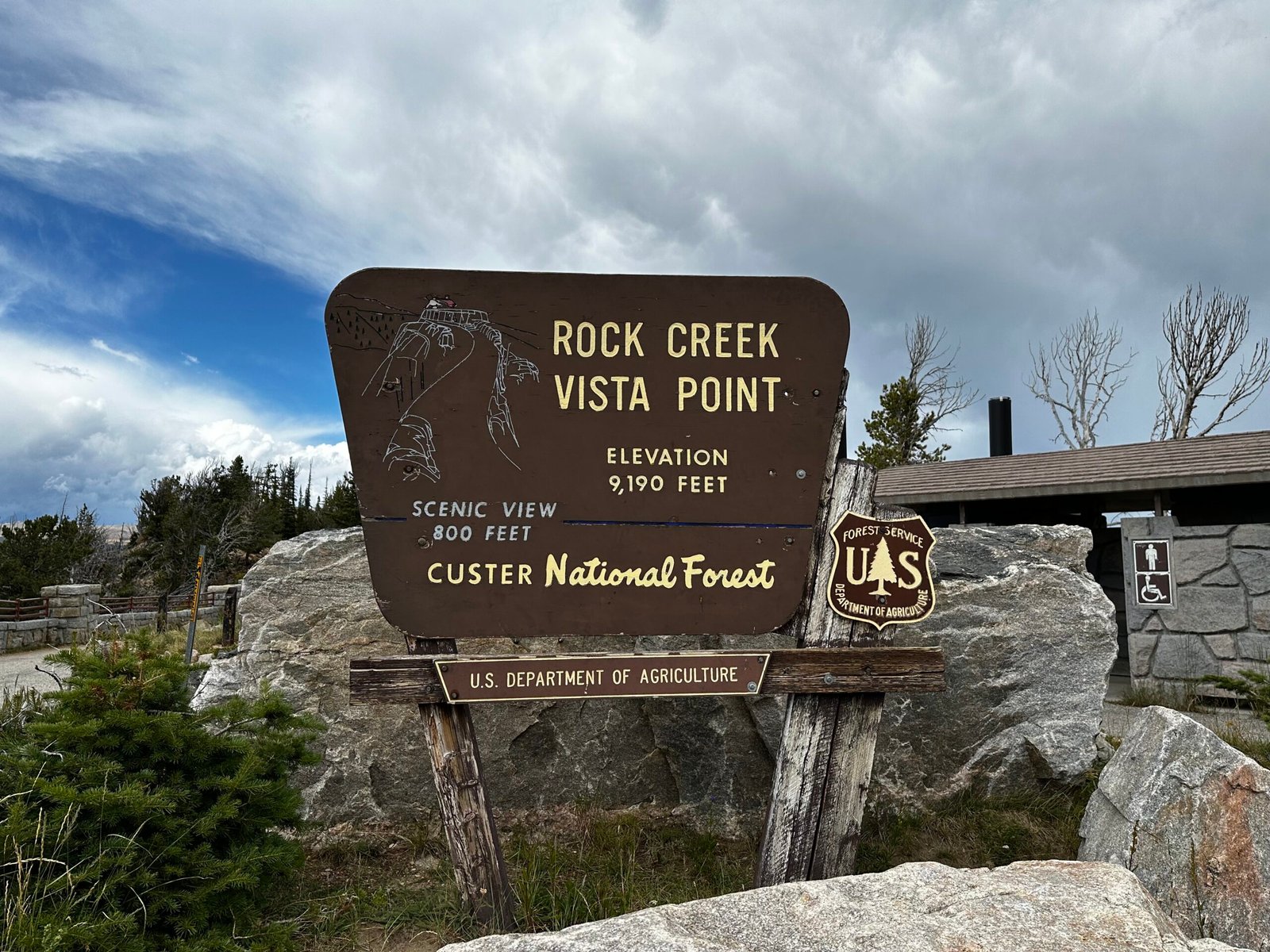
One of the most famous stops along the highway is Rock Creek Vista Point, an overlook known both for its incredible mountain views and its surprisingly fearless chipmunks. Travelers have been stopping there for years to take in the panoramic scenery and interact with the small animals that roam around the overlook.
During our stop, we only had cheddar crackers with us. Some of the chipmunks clearly did not approve of our snack selection and ignored us entirely, almost like tiny food critics judging our choices. One chipmunk, however, absolutely loved them. He grabbed an entire cracker, somehow managed to hold the whole thing in his mouth, and waddled down the rocky hillside carrying it away like he had just stolen treasure.
The little guy was honestly kind of chunky already, which somehow made the whole situation even funnier. Watching him struggle to haul a full cracker down the hill became one of the funniest memories of the trip.
Even without the chipmunks, Rock Creek Vista Point would still be worth the stop. The overlook provides one of the best views anywhere along the Beartooth Highway. Standing there, you can see layers of mountains stretching across the distance while the winding road disappears into the valleys below. It is the kind of view that makes people stop talking for a moment just to take it all in.
Ending the Journey in Red Lodge

After hours of driving through cliffs, mountains, and switchbacks, arriving in Red Lodge feels almost relaxing. The historic mountain town serves as the northeastern gateway to Yellowstone and has become a favorite stop for travelers exploring the region. Originally founded during the late 1800s as a coal mining town, Red Lodge eventually grew into a tourism destination thanks in large part to the Beartooth Highway itself.
The town has a welcoming atmosphere filled with local restaurants, shops, and historic western charm. After spending hours navigating narrow mountain roads, simply walking around Red Lodge feels rewarding.
For us, the highlight is always Red Lodge Pizza Co.. To this day, it still has some of the best pizza we have ever had anywhere. Whether it truly tastes better after surviving the Beartooth Highway or whether we are simply starving afterward is hard to say, but somehow it always feels like the perfect ending to the trip.

Their ice cream cookie dessert was equally incredible. After the stress and excitement of driving through one of America’s most intimidating scenic highways, sitting down with pizza and dessert almost feels earned. Maybe the drive really does make the food taste better.
Or maybe it is simply that good.


Why the Beartooth Highway Is Worth Experiencing
The Beartooth Highway is more than just a road leading away from Yellowstone. The drive itself becomes one of the highlights of the entire trip. Very few places in the United States combine this level of mountain scenery, elevation, history, and adventure all in one experience.
There are moments during the drive where the road feels genuinely intimidating, especially for anyone uncomfortable with heights. Yet those same moments are what make the journey memorable. You remember the cliffs, the endless mountain views, the patches of snow still clinging to the peaks, and the feeling of driving through an environment that seems untouched and massive.
You also remember the small moments along the way – the chipmunks at Rock Creek Vista Point, the jokes told inside the car to ease the nerves, and finally the reward of reaching Red Lodge at the end of the drive.
For anyone visiting Yellowstone while the highway is open, the Beartooth Highway deserves far more than a quick detour. It is one of the most breathtaking drives in America for a reason, and even years later it remains one of the roads my family still talks about the most.


Leave a Reply