 Skip to content
Visiting Salem, Massachusetts, in December offers a quieter look at the city’s witch trial history, historic homes, cemeteries, and famously haunted atmosphere.

Salem, Massachusetts, is most commonly associated with October tourism, haunted attractions, and Halloween events, but visiting in December offered a completely different experience. With the busy season over, the city became far quieter and easier to explore on foot. Instead of focusing on seasonal attractions, we spent most of our visit following the “Salem Tour” walking app, which guides visitors through many of Salem’s most historically important locations.
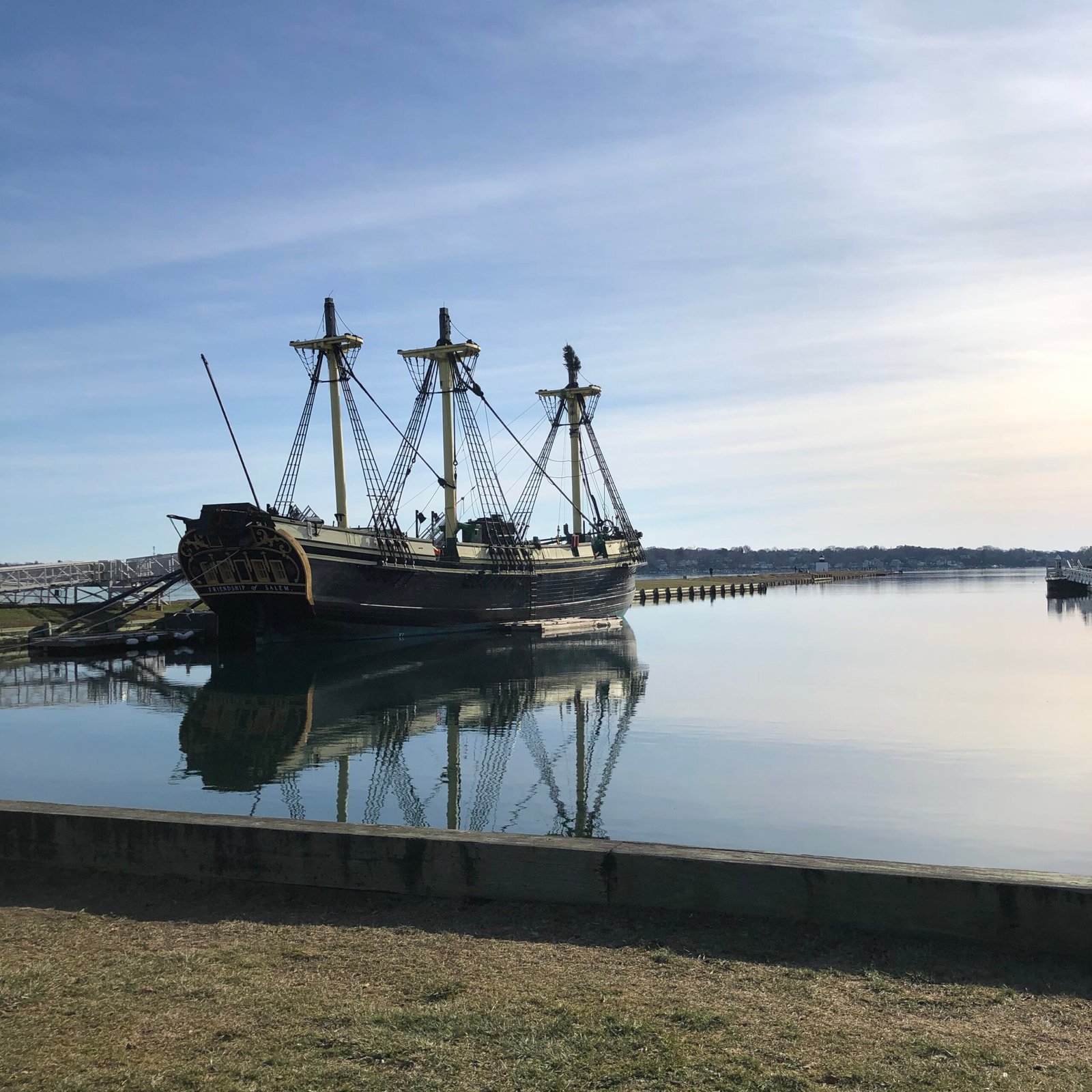
The self-guided route took roughly half a day. It connected many of the city’s major landmarks tied to the Salem Witch Trials, colonial Salem, maritime history, and Nathaniel Hawthorne. Because Salem is highly walkable, it was easy to move from site to site while seeing the city’s historic homes, cemeteries, churches, and older streets along the way.
One of the first major stops on the tour was the Salem Witch Trials Memorial. Dedicated in 1992 during the 300th anniversary of the trials, the memorial honors the twenty innocent people executed during the Salem Witch Trials of 1692. The memorial contains twenty stone benches, each engraved with the victim’s name, method of execution, and execution date. Nineteen victims were hanged, while Giles Corey was pressed to death after refusing to enter a plea.
Directly beside the memorial is the Old Burying Point Cemetery, also known as Charter Street Cemetery, which dates back to 1637 and is one of the oldest cemeteries in the United States. Several notable Salem figures are buried there, including Judge John Hathorne, one of the judges involved in the witch trials. His descendant, Nathaniel Hawthorne, later altered the spelling of his surname by adding a “w,” reportedly to distance himself from the family’s connection to the trials.


The walking route continued toward House of the Seven Gables, one of Salem’s most recognized historic homes. Originally built in 1668 for merchant and shipowner Captain John Turner, the mansion became famous after inspiring Nathaniel Hawthorne’s 1851 novel The House of the Seven Gables. The property overlooks Salem Harbor and reflects Salem’s period of wealth during its maritime trading years in the 18th century. Today, the site operates as a museum focused on both colonial architecture and Hawthorne’s literary legacy.
Nearby is the Nathaniel Hawthorne Birthplace, the home where Hawthorne was born in 1804. The structure was relocated in 1958 to the House of the Seven Gables property to preserve it. Hawthorne remains one of Salem’s most important literary figures, known for works including The Scarlet Letter and The House of the Seven Gables, both heavily influenced by New England history and Puritan society.


The app also directed us to the site of Ann Pudeator’s home. Ann Pudeator was one of the women executed during the Salem Witch Trials after being accused of witchcraft in 1692. She was a widow and nurse who was accused by several young girls during the height of the hysteria. Like many victims, her accusations reflected the fear, personal conflicts, and social tensions that fueled the trials rather than actual evidence.
Another stop included The Satanic Temple in Salem. Opened in 2016, the Salem location serves as both a headquarters and a public art space for the organization. Despite its name, the group identifies as a non-theistic religious and political organization focused on secularism and civil rights issues. The location has become one of Salem’s more modern tourist attractions due to its connection with the city’s reputation surrounding witchcraft and alternative religious history.

The route then brought us through Howard Street Cemetery, another historic burial ground connected to Salem’s colonial period. The cemetery dates back to the 18th century and contains graves belonging to several local families tied to Salem’s maritime and early industrial history.


One of the city’s most recognizable buildings on the tour was the Hawthorne Hotel. Opened in 1925, the hotel was named after Nathaniel Hawthorne and remains one of Salem’s landmark historic hotels. The Georgian Revival-style building was developed during a period when Salem was expanding its tourism industry centered around its colonial history and literary connections.

The image shows the Bewitched Statue.
The tour also passed the Bewitched Statue, dedicated to the television series Bewitched. Several episodes of the show were filmed in Salem in 1970, and the bronze statue of actress Elizabeth Montgomery was installed in 2005. While it represents Salem’s more commercial tourism side, it has become one of the city’s most photographed landmarks.
Another major historical location was the Joshua Ward House site. The original home stood on land once owned by Sheriff George Corwin, the high sheriff responsible for carrying out arrests and executions during the Salem Witch Trials. Corwin became one of the most controversial figures associated with the trials due to accusations of property seizures and mistreatment of the accused. Over time, the Joshua Ward House became heavily associated with ghost stories and paranormal claims connected to Corwin’s history.
During the walk, we also stopped at Turner’s Seafood, located inside historic Lyceum Hall. The building dates back to 1831 and served as an important public lecture hall during the 19th century. Notably, Charles Dickens gave readings there during his American tour in 1867. The structure later became associated with Salem’s commercial district while preserving much of its historic appearance.

One of the most historically important stops on the tour was The Witch House in Salem. Built around 1675, it was the home of Judge Jonathan Corwin, one of the judges who presided over the Salem Witch Trials examinations. It is the only surviving structure in Salem directly tied to the trials. The building was relocated slightly in the 1940s to preserve it from demolition and now operates as a museum showcasing daily colonial life and Salem’s role during 1692.
The final major stop on the route was Proctor’s Ledge Memorial. Historians identified this location in 2016 as the likely site where the executions from the Salem Witch Trials occurred. For many years, the exact execution site remained uncertain, with Gallows Hill traditionally believed to be the location. Research conducted by local historians and archaeologists helped confirm Proctor’s Ledge as the more probable site. The memorial today contains granite markers dedicated to each victim executed there.

Along the route, one detail that repeatedly stood out was Salem’s water tower featuring a large witch logo. It reflects how deeply Salem’s identity has become tied to the witch trials and supernatural tourism. At the same time, walking through Salem after peak tourist season made it easier to notice the city’s broader historical significance beyond its Halloween reputation.


Throughout the tour, Salem’s colonial architecture remained one of the most memorable parts of the visit. Many homes date back hundreds of years, particularly within the McIntire Historic District and surrounding downtown streets. The narrow roads, older wooden homes, stone walls, and historic cemeteries make it easy to understand why Salem became so associated with ghost stories and folklore over time.

Visiting Salem in December also made the city feel more historical than theatrical. Without the heavy crowds and seasonal events, the focus naturally shifted toward the actual history of the Salem Witch Trials, early colonial America, maritime trade, and Nathaniel Hawthorne’s literary influence. Using the Salem Tour walking app helped organize the experience into a connected historical route and made it possible to explore many of the city’s most important sites in a single afternoon while still learning the historical background behind each location.


However, the next time you hear a witch’s cackle echo through Salem’s streets, glance toward the night sky – because somewhere above the old rooftops and crooked trees, you may just spot a broomstick disappearing into the glow of the full moon before the curse finds you next.



Leave a Reply