Blog Posts
- Best Places to See in Seoul, South Korea (2026 Guide): Palaces, Night Views, and Iconic City Walks
- Do You Really Not Need Korean When Traveling to South Korea?
- Essential Tips for Eating in South Korea: Food Etiquette, Dining Customs, and Helpful Korean Phrases
- First Time Visiting South Korea: Everything You Need to Know
- Getting Spa Treatments in South Korea: What We Learned the Hard Way
- How Much Should You Budget for Two Weeks in South Korea?
- How to Stretch Your Travel Budget Without Sacrificing the Experience
- How to Spend One Perfect Day in Seoul, South Korea
- Is It Better to Fly Into Busan or Seoul? Best Airport to Start Your South Korea Trip
- Romantic Things to Do in Seoul: The Perfect Romantic Evening Itinerary for Couples
- South Korea Travel Guide 2026: Entry Requirements, Best Places to Visit, Itineraries, Food, and Tips for First-Time Travelers
Our time in South Korea felt like stepping into a place where history and modern life exist side by side, not in contrast – but in harmony. It’s a country that has endured centuries of change, from ancient kingdoms to rapid modernization, and somehow carries all of it with grace. Everywhere we went, we felt that balance – between past and present, tradition and innovation, quiet reflection and vibrant energy.
Busan was our first introduction, and it welcomed us in a completely different way than we expected. As South Korea’s largest coastal city, Busan feels open, relaxed, and deeply connected to the sea. Historically, it has been one of the country’s most important ports, shaping its identity through trade, resilience, and cultural exchange. There’s a sense of movement here – but it’s softer than Seoul, carried by ocean air instead of city rush.
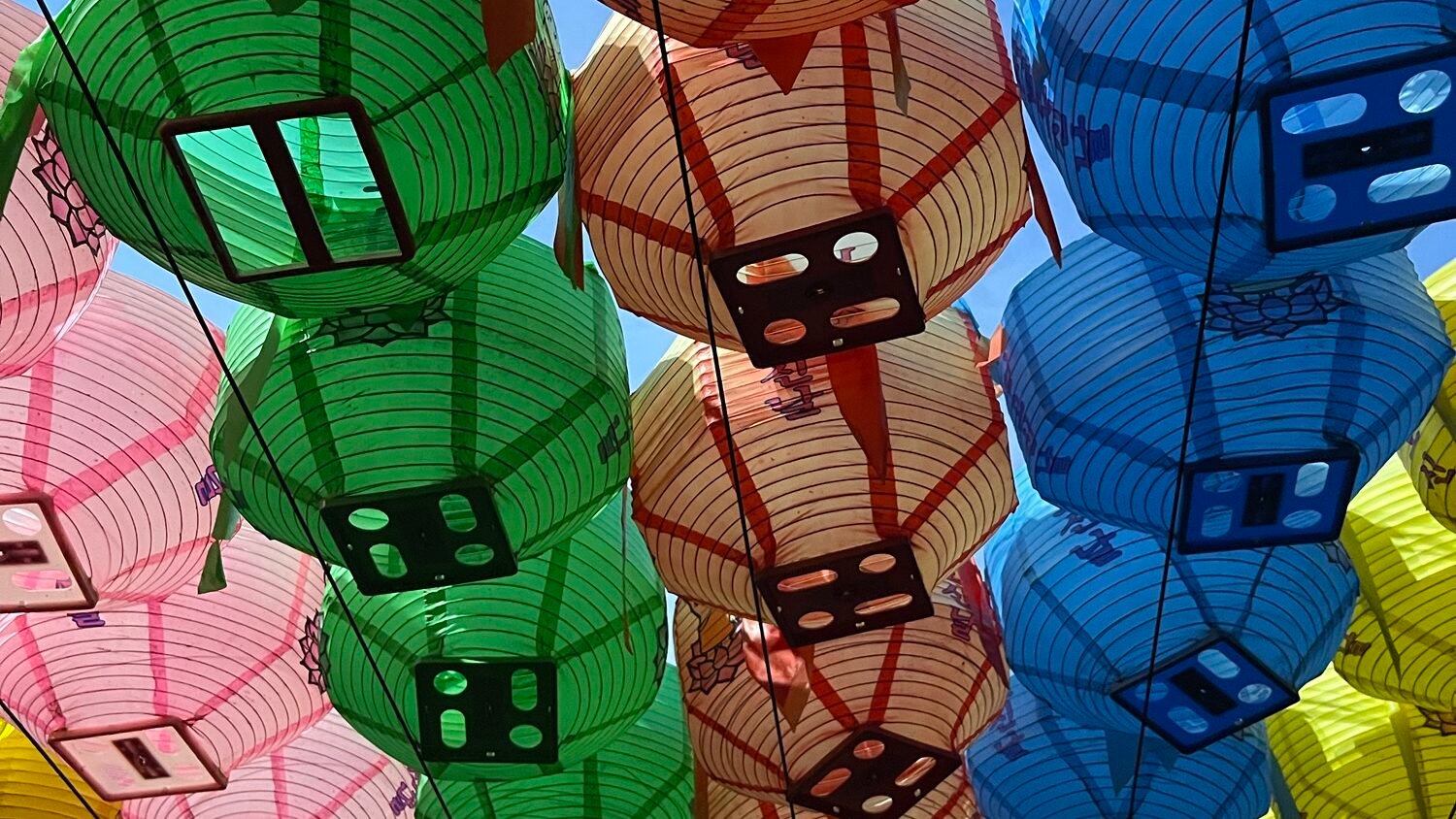
One of the most unforgettable places we visited was Haedong Yonggungsa Temple. Unlike most Korean temples, which are tucked into mountains, this one faces the sea. Originally built during the Goryeo Dynasty, it stands as a place of hope and prayer. Watching the waves crash against the rocks below while standing in such a peaceful space created a powerful contrast – one that felt both grounding and humbling. It was one of those moments where everything slows down, and you just take it in.
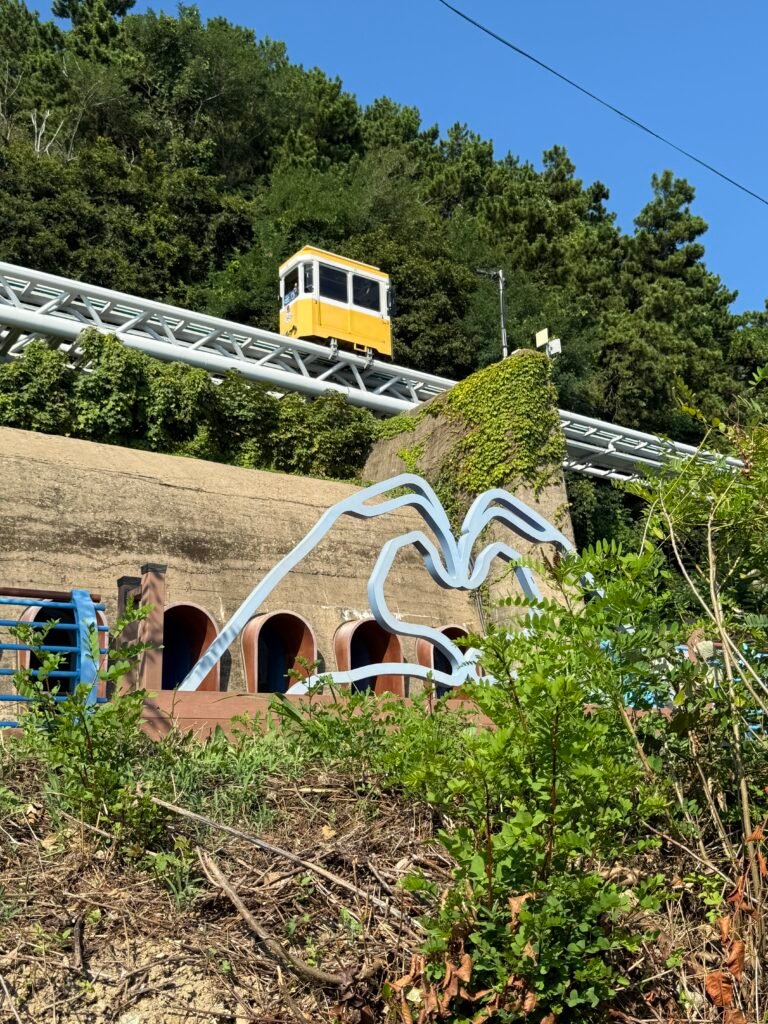
Busan’s rhythm felt different in the best way. Walking along the coastline, taking in the sound of the water, and riding trains that followed the ocean gave us moments of stillness that set the tone for the rest of the trip. The colorful hillside homes and bustling markets added warmth and personality, reflecting a city that is vibrant but not overwhelming. There’s a sense of community here that feels genuine and welcoming, shaped by both its coastal lifestyle and its long history as a gateway to the world.
From Busan, we traveled to Gyeongju – and in many ways, it felt like stepping back in time. Often called “the museum without walls,” Gyeongju was once the capital of the Silla Kingdom, which ruled much of the Korean Peninsula for nearly a thousand years. Unlike Busan’s coastal openness, Gyeongju felt quiet, reflective, and deeply rooted in history.
Walking through Gyeongju was unlike anything we had experienced before. Ancient royal tombs rise gently from the earth like soft green hills, blending into the landscape in a way that feels both natural and sacred. It’s almost surreal to realize that beneath those peaceful mounds lie the resting places of kings and queens from over a thousand years ago. There’s a stillness here that invites reflection – a sense that the past isn’t distant, but quietly present.
Visiting Bulguksa Temple was one of the most meaningful parts of our time there. Built during the height of the Silla Kingdom, it stands as a masterpiece of Buddhist architecture and devotion. Walking up its stone steps, surrounded by intricate design and calm surroundings, felt grounding in a deeper way. Not far away, the Seokguram Grotto – carved into the mountainside – holds a serene Buddha statue that gazes out toward the sea, symbolizing peace, enlightenment, and spiritual balance.
Gyeongju gave us a deeper understanding of Korea’s roots. It wasn’t fast-paced or filled with distractions – it was a place that encouraged you to slow down and truly feel where you were. It added a sense of depth to the trip, connecting everything we were experiencing to the history that shaped it.
By the time we arrived in Seoul, we carried that perspective with us – and it made the city feel even more meaningful. Seoul is one of the most dynamic cities in the world, but beneath its fast pace is a cultural identity shaped by thousands of years of history. Once the capital of the Joseon Dynasty, Seoul still holds onto its historical heart, even as it has grown into a global hub of technology, fashion, and creativity.
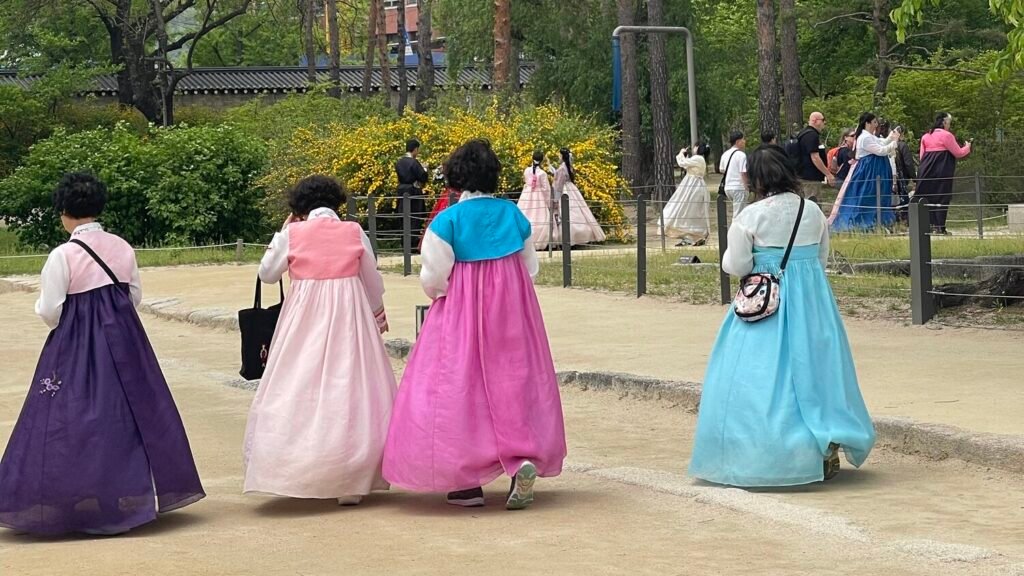
Walking through Gyeongbokgung Palace, you can feel that history come alive. Built in 1395, the palace stands as a symbol of Korea’s royal past. As we wandered through its courtyards and pavilions, it felt like stepping into another era. The mountains behind the palace, the symmetry of the architecture, the attention to detail – it all reflects the values of harmony and balance that are so central to Korean culture. Seeing people dressed in hanbok didn’t feel like a performance – it felt like tradition continuing in the present.
But just beyond the palace walls, Seoul tells a story of resilience and transformation. After the Korean War, the city rebuilt itself into what it is today – a place of innovation, creativity, and global influence. You can see it in places like the Starfield Library, where modern design meets a deep respect for knowledge and learning. Standing beneath those towering bookshelves felt symbolic – like a reflection of how far the country has come while still valuing growth and education.
At Lotte World Tower, looking out over the endless skyline, the scale of that transformation really sinks in. The city stretches in every direction, filled with life and ambition. And yet, just a short distance away, places like Olympic Park offer a completely different feeling. Families gather, people walk quietly through open spaces, and there’s a shared appreciation for simply being present. That balance – between energy and calm – is something we felt throughout the entire trip.
Seoul also gave us some of our most personal moments. Making silver rings together ended up being one of the most meaningful experiences we had. It was simple, but it reflected something deeply rooted in Korean culture – a respect for craftsmanship and creating something with intention. It became more than just an activity; it was a memory we made together, tied to the place and the moment.
Across all three cities, one of the most impactful parts of our experience was the people. There’s a quiet kindness in South Korea that shows itself in small ways. Whether it was someone helping us navigate directions despite a language barrier, or simply the respectful way people interact in public, there’s a shared sense of awareness and consideration. It makes you feel comfortable, even far from home.
Korean culture places a strong emphasis on respect – respect for elders, for tradition, and for one another. You can feel that in everyday life. There’s also a deep pride in the country’s identity, expressed not only in its history but in its modern achievements, from technology to entertainment to cuisine. It’s a culture that honors where it’s been while continuing to grow.
Looking back, South Korea gave us more than just a travel experience – it gave us a deeper appreciation for how history, culture, and people shape a place. From the ocean views of Busan to the ancient stillness of Gyeongju to the vibrant energy of Seoul, every part of the journey felt connected.
And more than anything, it was the feeling that stayed with us. The quiet moments, the shared experiences, the sense of being somewhere truly unique. South Korea isn’t just a place you visit – it’s a place you feel. And long after we left, we found ourselves carrying a piece of it with us, already hoping for the day we can return.
Interested in Booking Yourself?
Photo Gallery